
Car marketplace and sales CRM
KAYANAK
Arabic-first car marketplace and sales CRM for a Riyadh car business, with installment pricing, car-wash booking and an AI sales assistant.
- Role
- Lead full-stack developer and DevOps
- Platforms
- Web, Mobile, Backend & API, Cross-platform
- Status
- Live
- Timeline
- 2026
- Client
- KAYANAK Cars (kayank.app)
- Web application
- Mobile app
- E-commerce
- Business system
Overview
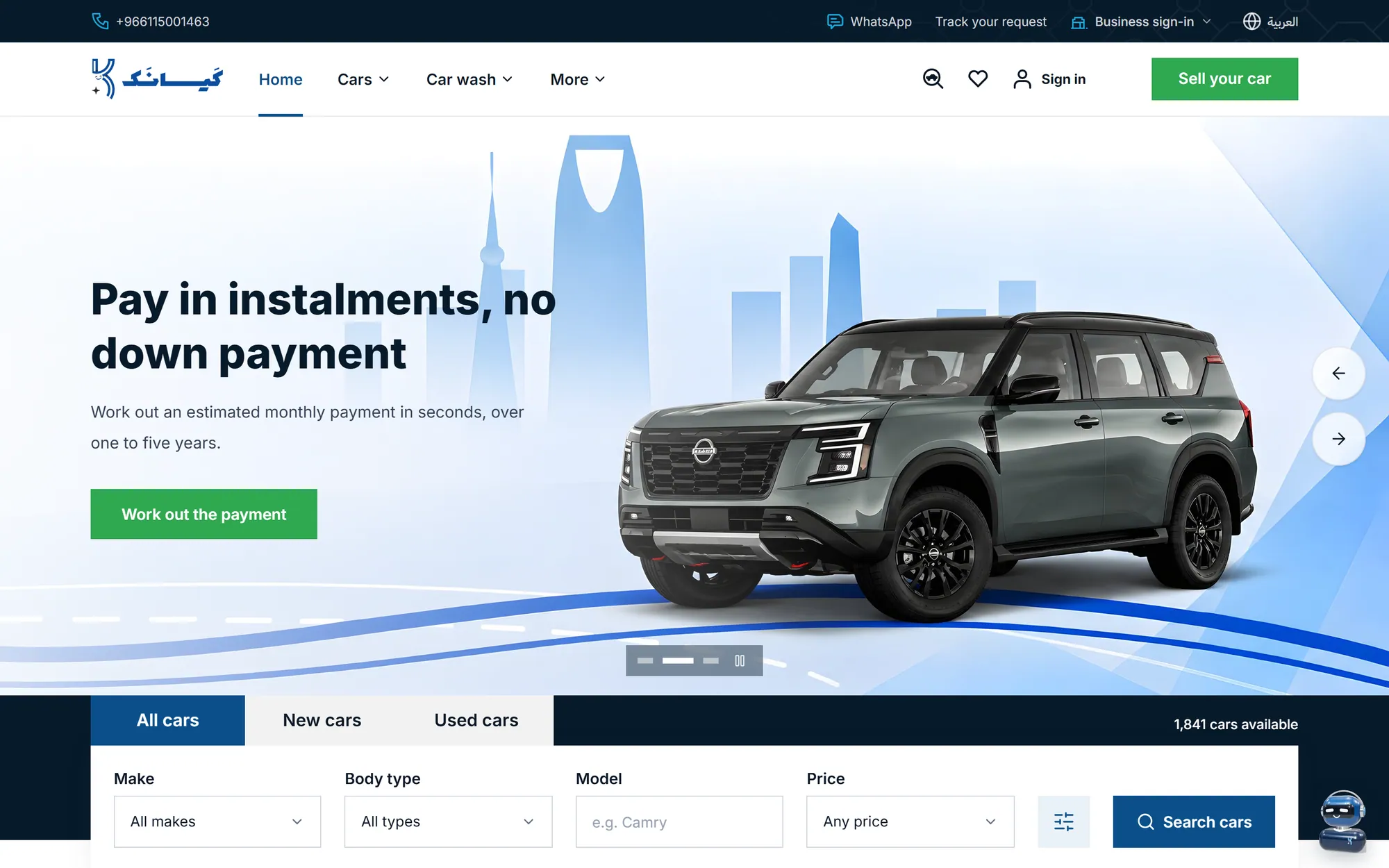
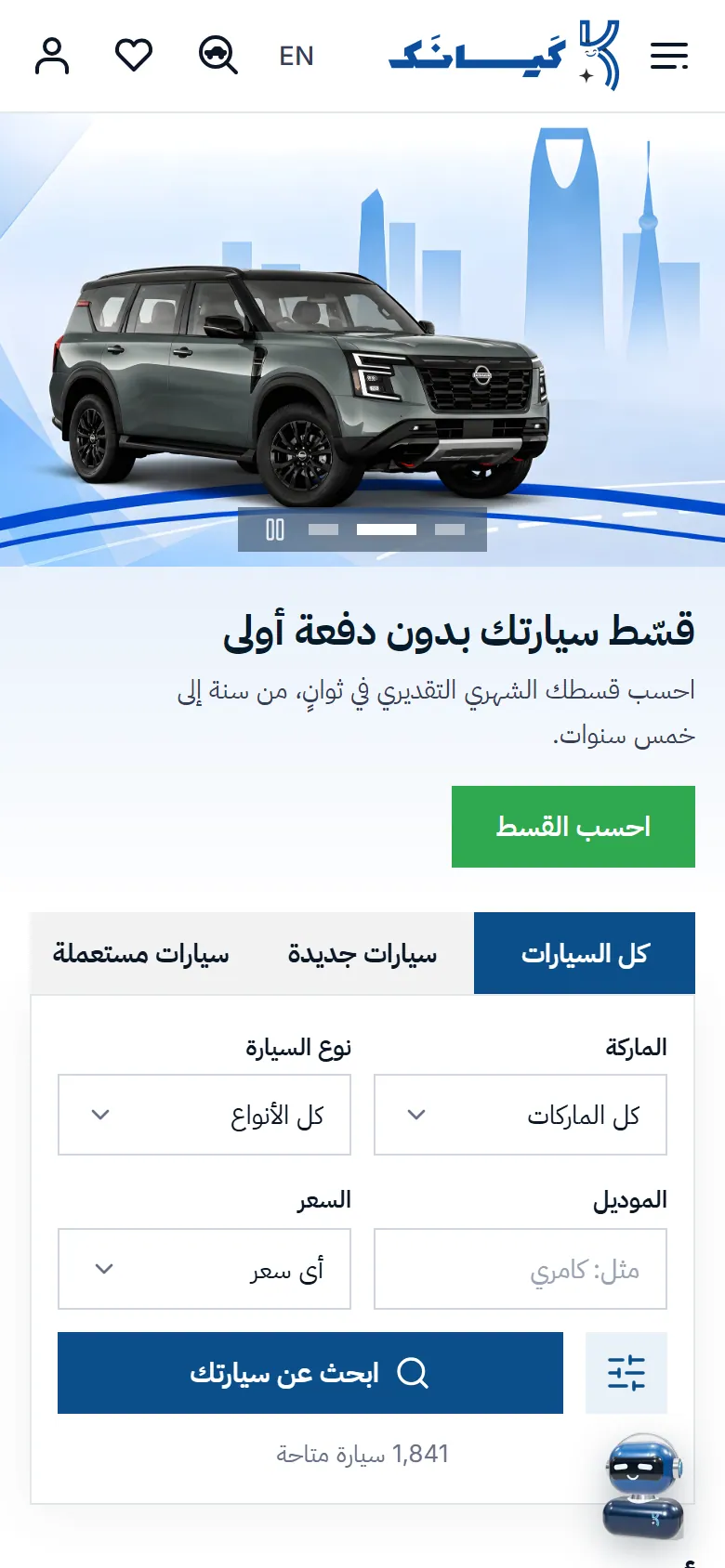
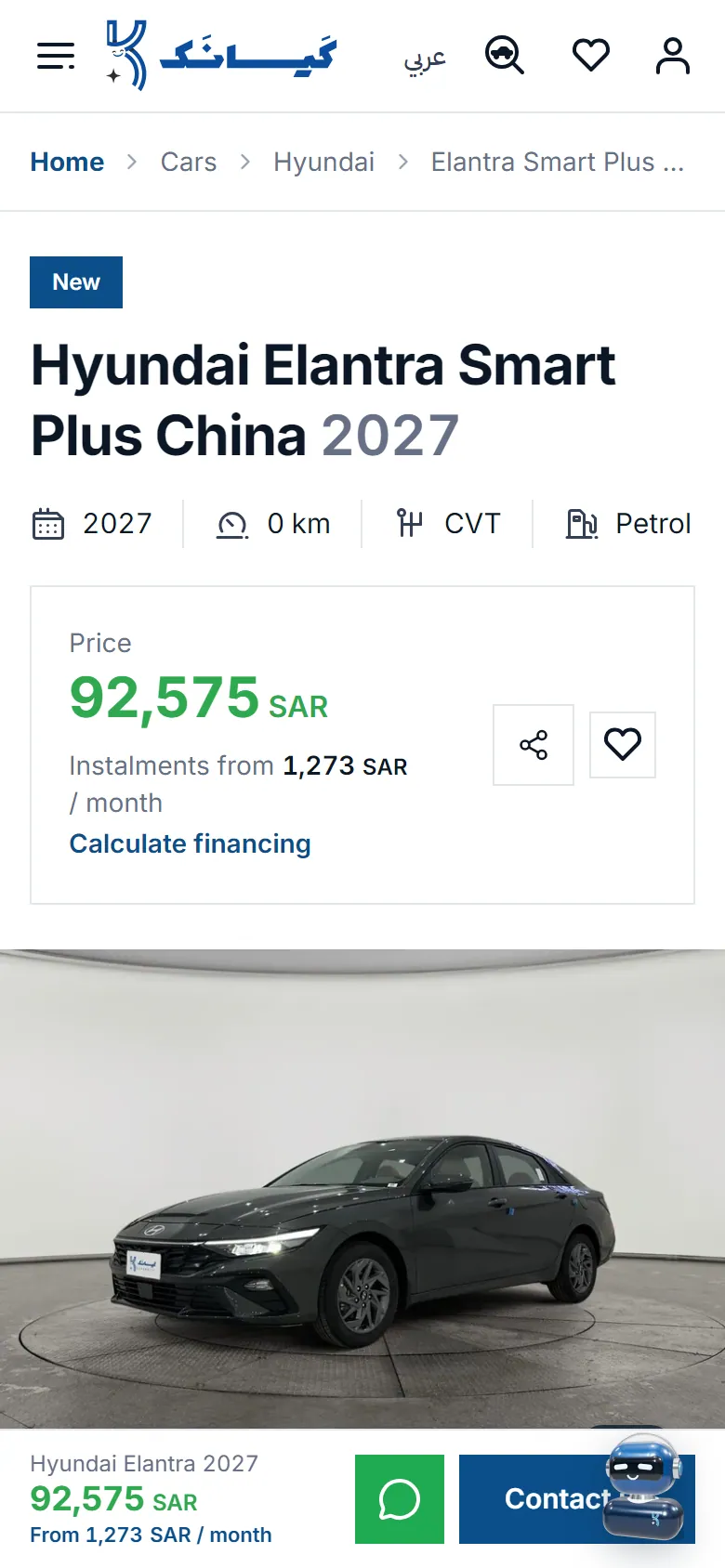
KAYANAK (كيانك) is a Riyadh automotive platform that sells cars online with installment financing as the main offer. Customers browse a digital showroom where every car shows its cash price beside an estimated monthly installment, request financing, book an on-demand car wash or submit their own car for sale to partner dealers.
Behind the public site is one API serving three clients: an Arabic-first Next.js website, a Next.js admin dashboard that holds the sales CRM and separate portals for partner dealers and commission-earning marketers, and a Flutter app for customers and marketers. An AI sales assistant answers buyers on WhatsApp by searching live stock, and the same agent backs a web chat and an in-app chat.
I was the lead developer on a small team. I built the first working version in seven days, set up the hosting, deployment and most of the third-party services, and built most of the modules that followed, from the CRM and financing tools to smart search, the affiliate program and the mobile app redesign. A second developer built the first version of the WhatsApp AI agent, the AI blog writer and phone sign-in; I took the WhatsApp agent live and extended it.
Built for: Car buyers and sellers in Riyadh who speak Arabic or English, plus the KAYANAK sales team, managers, partner dealers and marketers who promote cars for commission.
The problem
A new Saudi car business needed one system to sell cars online, capture leads from many channels (website, WhatsApp, TikTok lead forms and an AI assistant), share those leads fairly across a sales team, run a car-wash service and a sell-your-car pipeline for dealers, and pay commission to marketers who bring in buyers.
It had to work in Arabic first, in both right-to-left and left-to-right layouts, and it had to go live within days rather than months.
The solution
I designed a single NestJS and PostgreSQL API as a modular monolith, with in-process events keeping modules such as commissions, CRM and notifications decoupled. The website, the admin dashboard and the Flutter app all talk to the same REST contract, documented with Swagger.
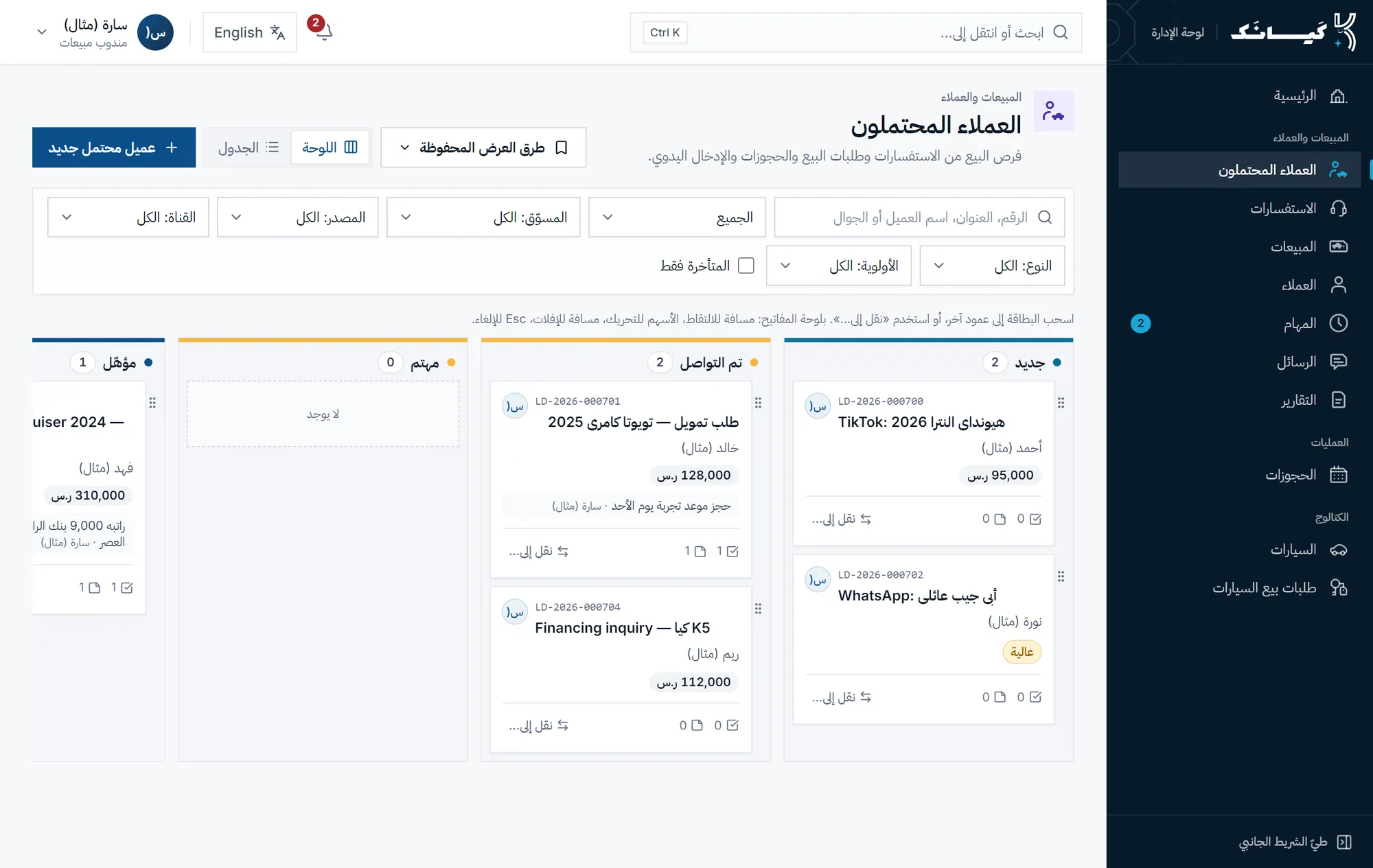
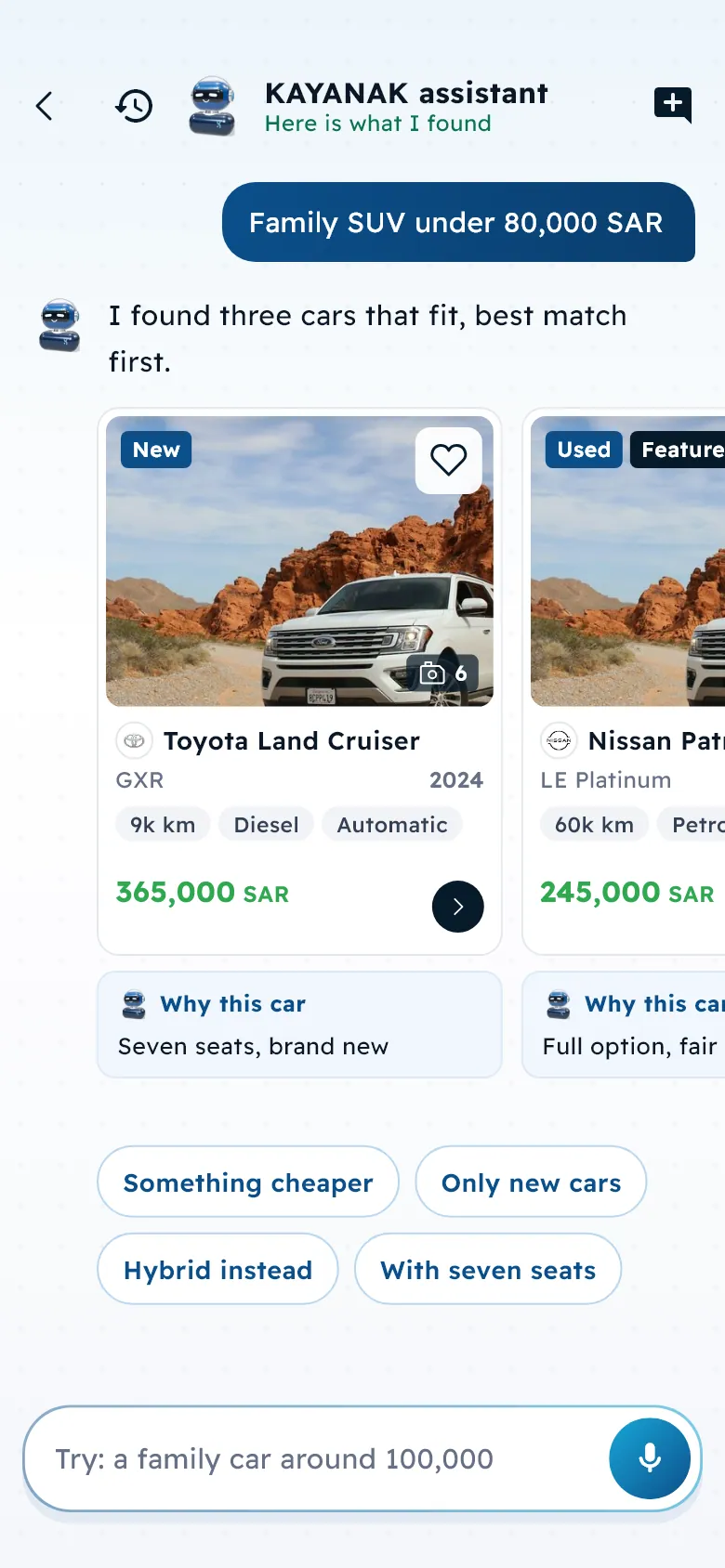
The public site puts an installment price on every car and adds natural-language search, a financing calculator, wash booking and a five-step sell-your-car flow. Staff work from a Kanban CRM with round-robin lead distribution, WhatsApp messaging, quotations and role-based access. The Flutter app mirrors the showroom and adds a voice-enabled AI assistant, a marketer mode with a branded poster maker, and push notifications.
Main features
Showroom with installment pricing
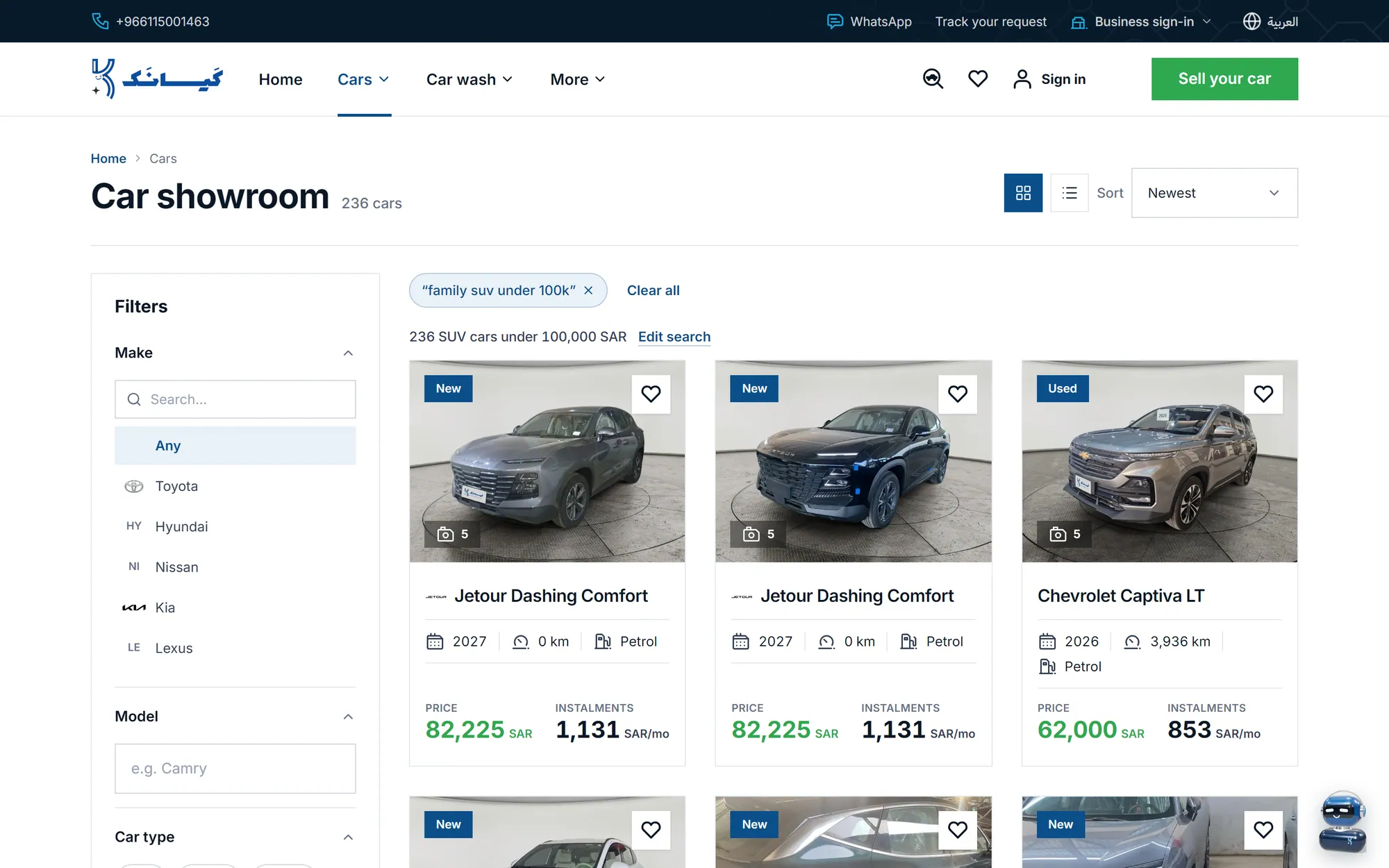
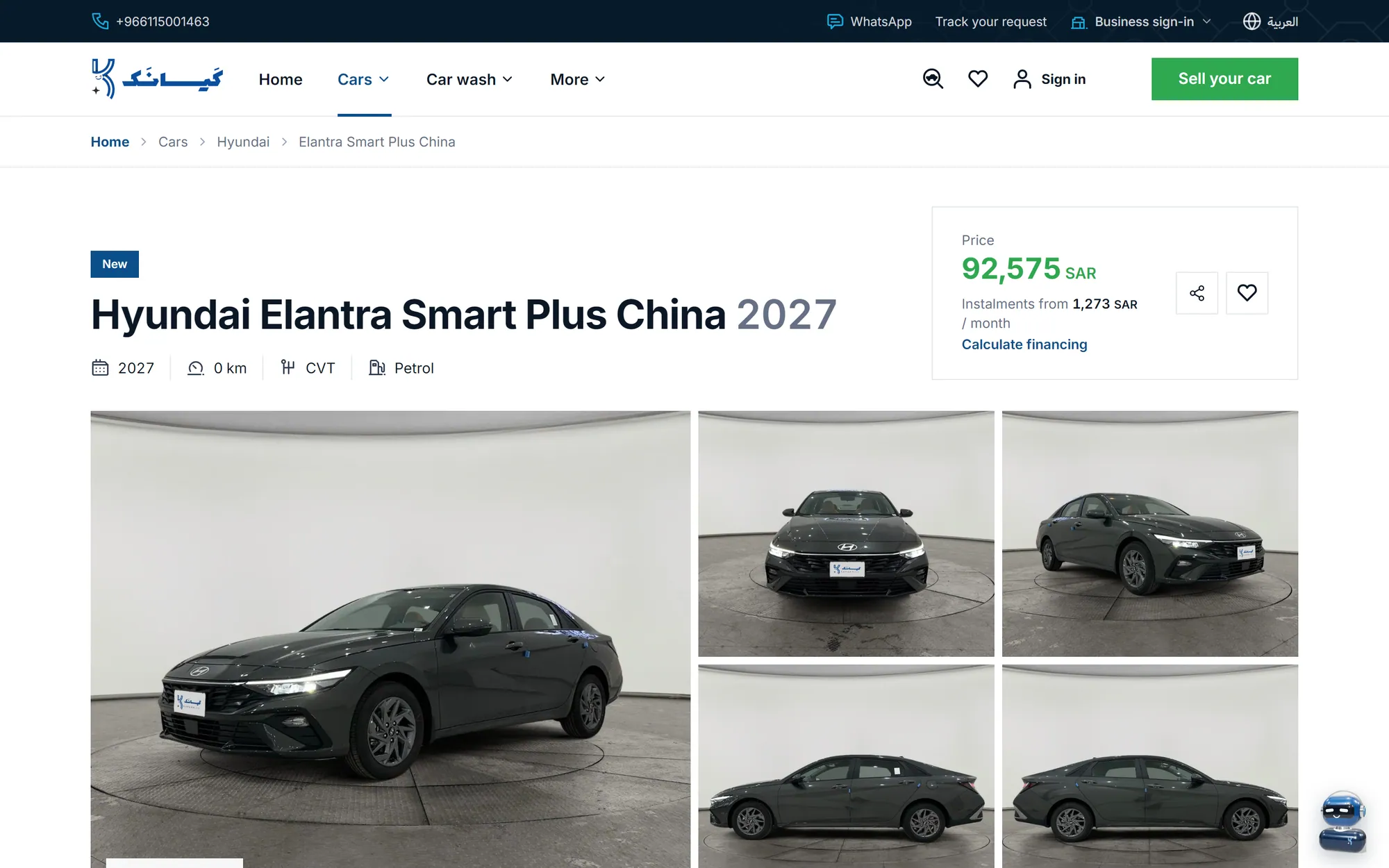
Filter by make, body type, model and price, switch between grid and list views, and see the cash price next to an estimated monthly installment on every card and detail page.
Financing calculator and eligibility check
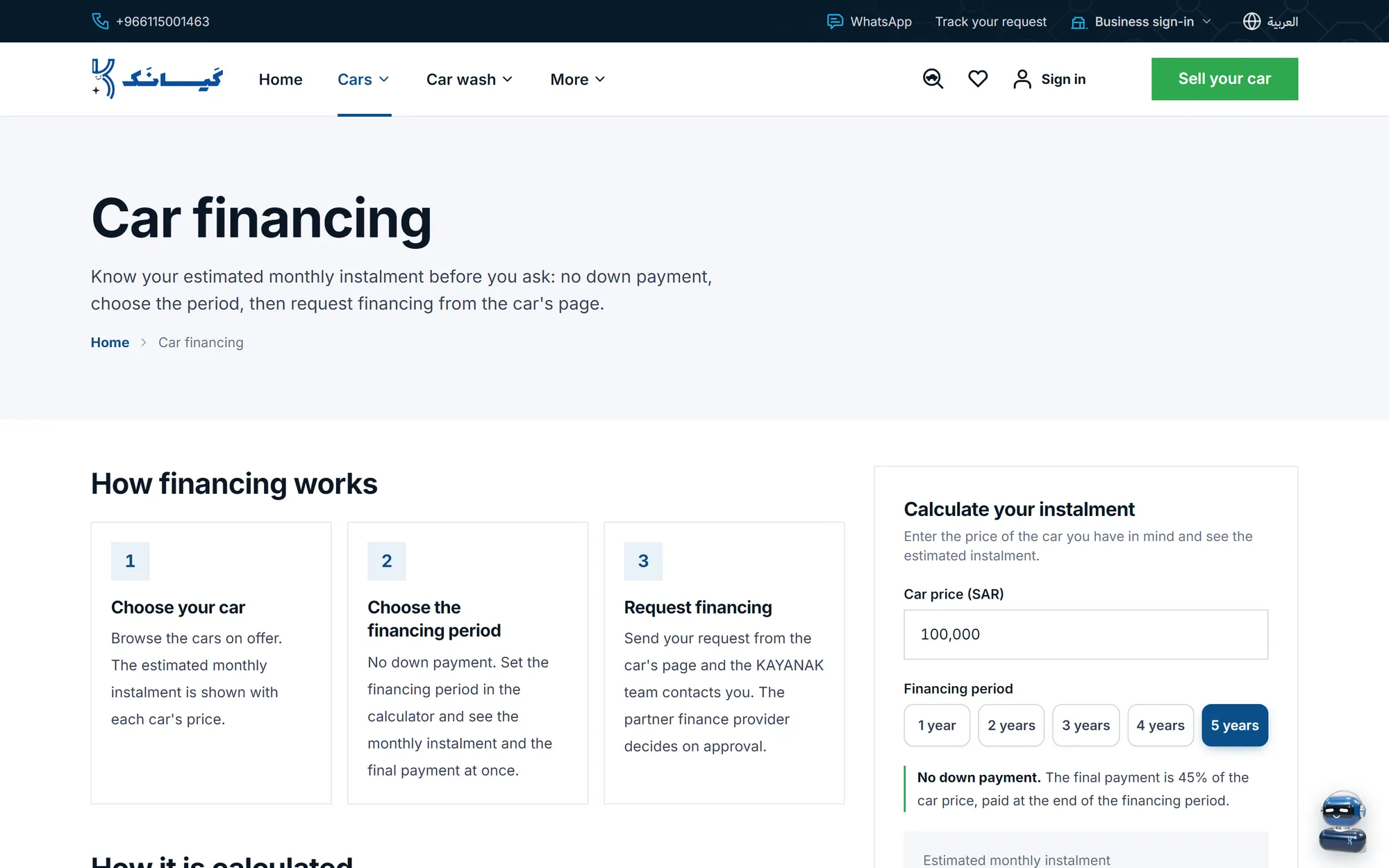
Customers estimate a no-down-payment plan over one to five years with a final balloon payment, then request financing from the car page. Sales staff get an internal eligibility check that applies several Saudi bank policies and returns a green, yellow or red result.
Smart bilingual search
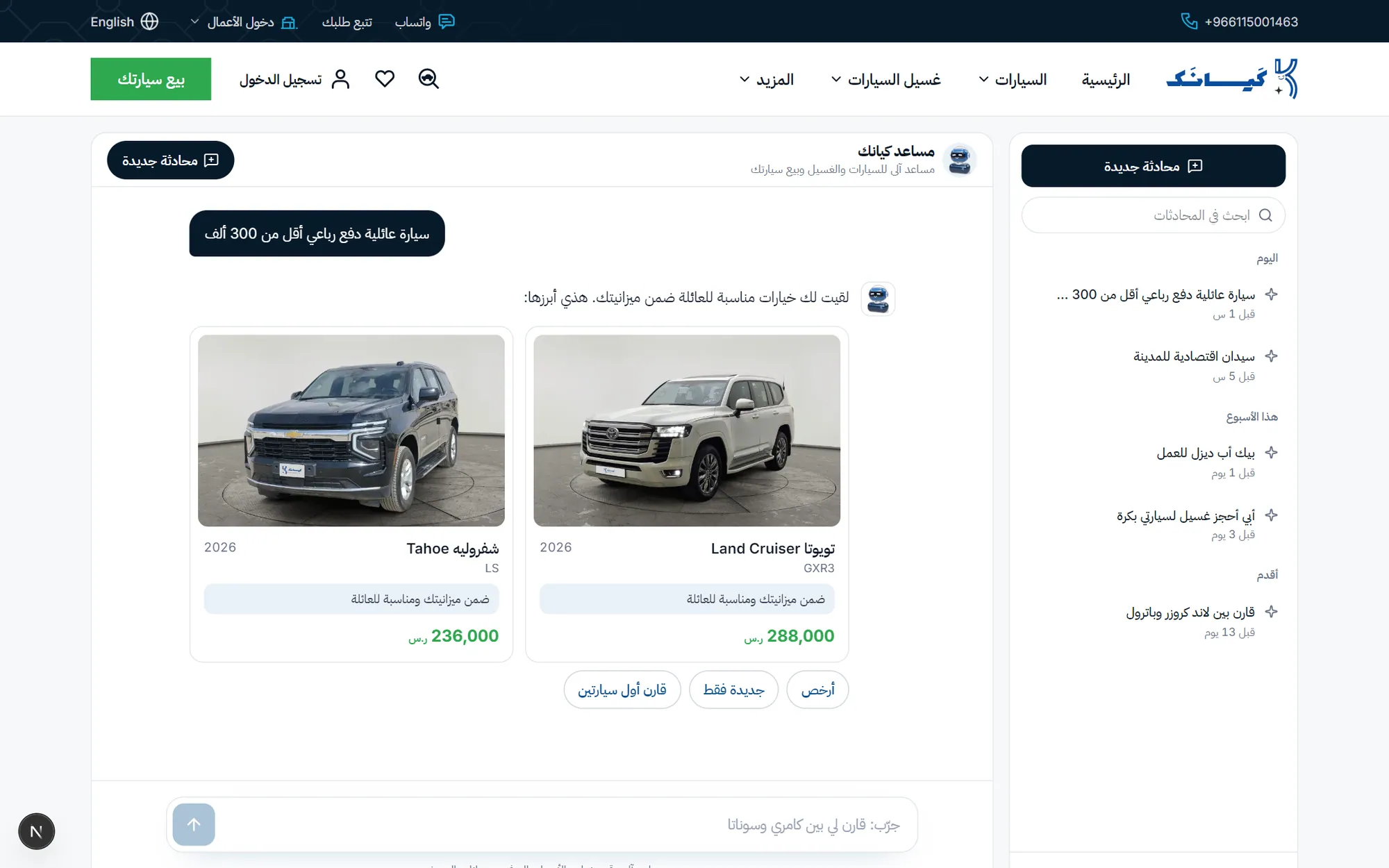
A deterministic parser normalizes Arabic text, maps Arabic make and model names, corrects typos and pulls out make, model, year, body, fuel, color and price. A query like "family suv under 100k" becomes a filtered list of SUVs under 100,000 SAR.
AI sales assistant
An LLM agent with tool calling searches live stock, shows car cards, takes financing requests and steps back once a salesperson replies. It runs on WhatsApp, and the same agent drives a web chat with history and an in-app chat with voice input.
Sales CRM
An eight-stage Kanban lead board with saved views, notes, tasks, an interaction timeline, WhatsApp templates, CSV exports and Arabic to English message translation. Leads are assigned round-robin and reassigned automatically after 15 minutes without action.
Multi-channel lead capture
Leads arrive in the CRM from website inquiries, sell-car requests, WhatsApp, the AI assistant and TikTok lead forms, and each request triggers a WhatsApp confirmation to the customer.
Marketer (affiliate) program
Referral links with UTM tracking and a 90-day attribution window feed a conversion, commission and payout chain. Marketers apply online, track their sales in a portal and generate branded posters that show the cash price and monthly installment.
Sell your car and dealer portal
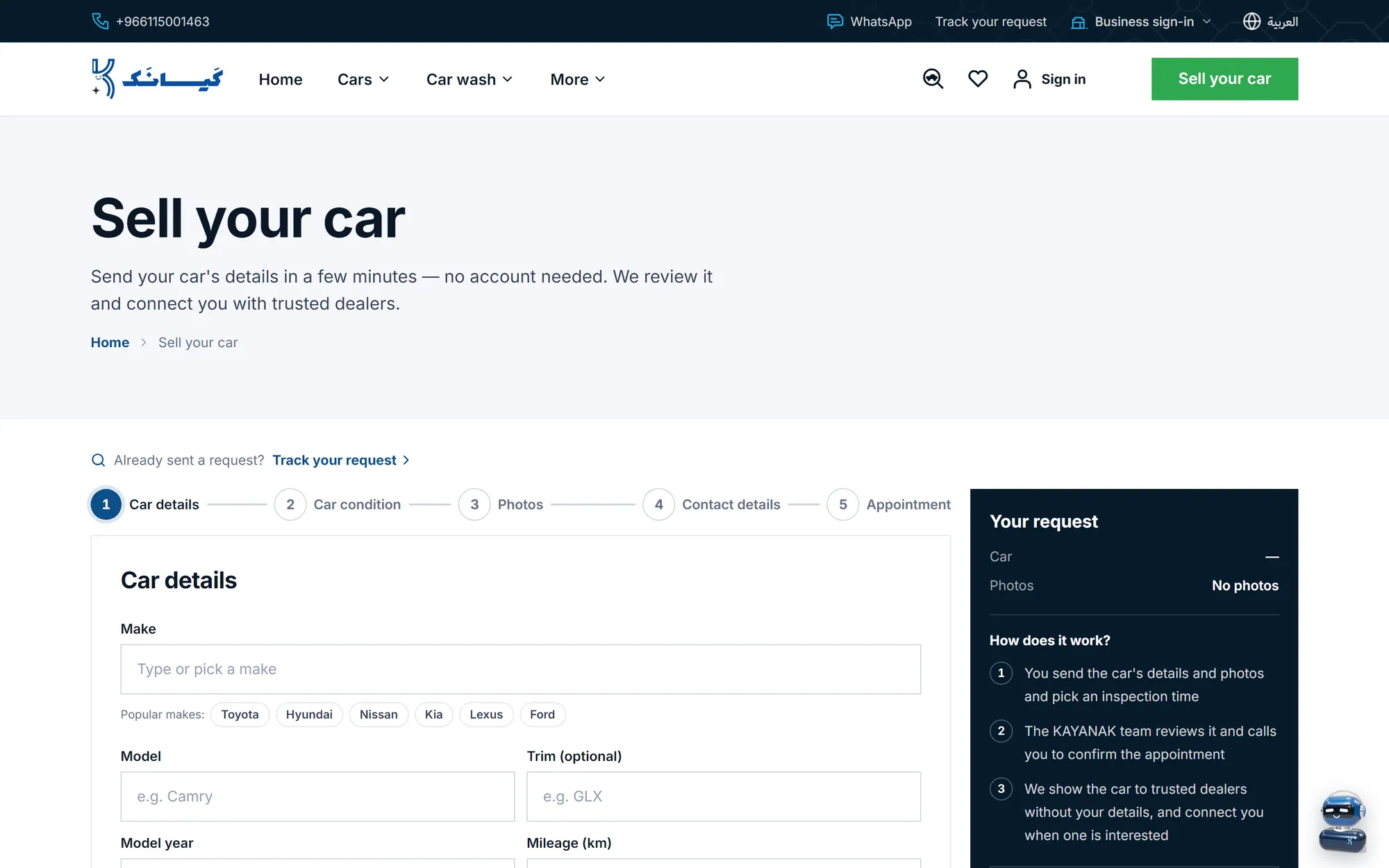
Sellers complete a five-step guest flow (car details, condition, photos, contact, inspection appointment) and can track their request. Reviewed cars are shown anonymously to partner dealers, who make offers through their own portal.
On-demand car wash booking
Services priced by vehicle type and city, time slots with capacity limits, a Mapbox location picker with service-area polygons, and a booking state machine with audited overrides.
Quotations, content and push notifications
Staff print A4 quotations for customers, schedule hero slides and banners targeted by make or body type, and reach customers and marketers through Firebase push notifications with an in-app inbox.
Inside the product
Screens from the software itself. Design prototypes and illustrative mockups are labelled as such.

Development and architecture
The system is four repositories sharing one REST contract: a NestJS 11 API in strict TypeScript, a Next.js 16 public website, a Next.js admin app that also hosts the dealer and marketer portals, and a Flutter app built with Riverpod. Both web apps proxy their API calls to the backend, and the website is revalidated from the API whenever a car changes.
Data lives in PostgreSQL through Prisma, with UUID keys, soft deletes, decimal money, price and commission snapshots, and timestamps stored in UTC and shown in Riyadh time. The pgvector extension holds embeddings for semantic search.
I run production on an Ubuntu VPS behind Nginx and Cloudflare, with media in Cloudflare R2. Deploys are one command: back up the database, run migrations, switch releases and check health, keeping the last three releases for rollback. Docker Compose covers local development.
- Modular monolith with events
- Controllers stay thin, services own the logic and in-process events decouple commissions, CRM and notifications. I kept it deliberately single-instance and documented the in-memory rate limits and caches as an explicit constraint.
- Authentication and access control
- Argon2id password hashing, 15-minute access tokens and hashed refresh tokens with family rotation and reuse detection. Ten roles map to permissions, and a test fails if any admin route is missing a role or permission check.
- Integrity enforced in the schema
- Unique constraints make a second commission for the same conversion impossible, and financial totals are computed from aggregates so they cannot drift from the underlying records.
- Guarded AI agent
- Building on a teammate's first version, I hardened the agent for production. The LLM layer sits behind a provider abstraction (OpenAI, Anthropic or a fake driver, so tests run without API keys). An output guard rejects any price, percentage or link that did not come from that turn's tool results, and daily caps plus an admin kill switch limit cost and risk.
- Semantic search foundation
- Each car gets a search document and a 768-dimension Gemini embedding stored in pgvector. A background worker re-embeds changed cars and reuses vectors for identical texts. I built it as the base for hybrid AI search alongside the deterministic parser.
- Arabic-first, right-to-left UI
- Locale lives in the URL (/ar and /en), layouts use logical CSS properties so they flip cleanly between right-to-left and left-to-right, and each locale has a single serializable dictionary.
- Integrations
- WhatsApp Business messaging through Hatif, SMS one-time passwords, TikTok lead forms and pixel events, Mapbox maps and geocoding, Firebase Cloud Messaging, Cloudflare R2 storage and SMTP email.
Technology
- NestJS
- TypeScript
- Next.js
- React
- PostgreSQL
- Prisma
- Flutter
- Tailwind CSS
- pgvector
- Google Gemini
- WhatsApp API
- Firebase
Results
- To build the first working version
- 7 daysTo build the first working versionShowroom, wash booking, sell-your-car, dealer leads, affiliates, admin and app
- Cars listed in the live showroom
- 1,841Cars listed in the live showroomPublic listing count, November 2026
- To embed every listed car for semantic search
- 39 sTo embed every listed car for semantic searchAbout USD 0.01 in embedding costs
- Pull requests I merged in the first 27 days
- 140Pull requests I merged in the first 27 days
Related projects
Engineering consultation marketplace app
Estasher
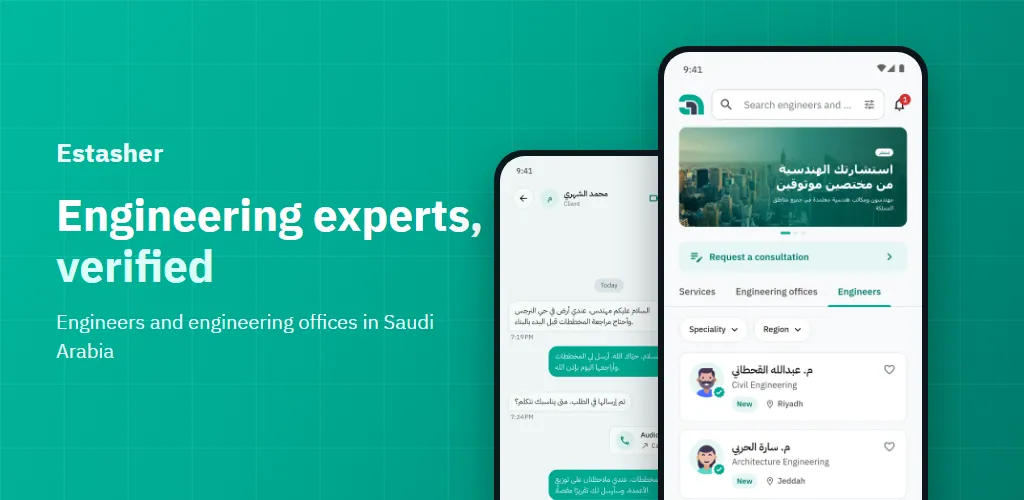
A bilingual iOS and Android marketplace where clients in Saudi Arabia book consultations and request offers from verified engineers and engineering offices.
- Mobile app
- SaaS product
- Business system
- Web application
Multi-vendor optical marketplace
AsaanOptics Marketplace
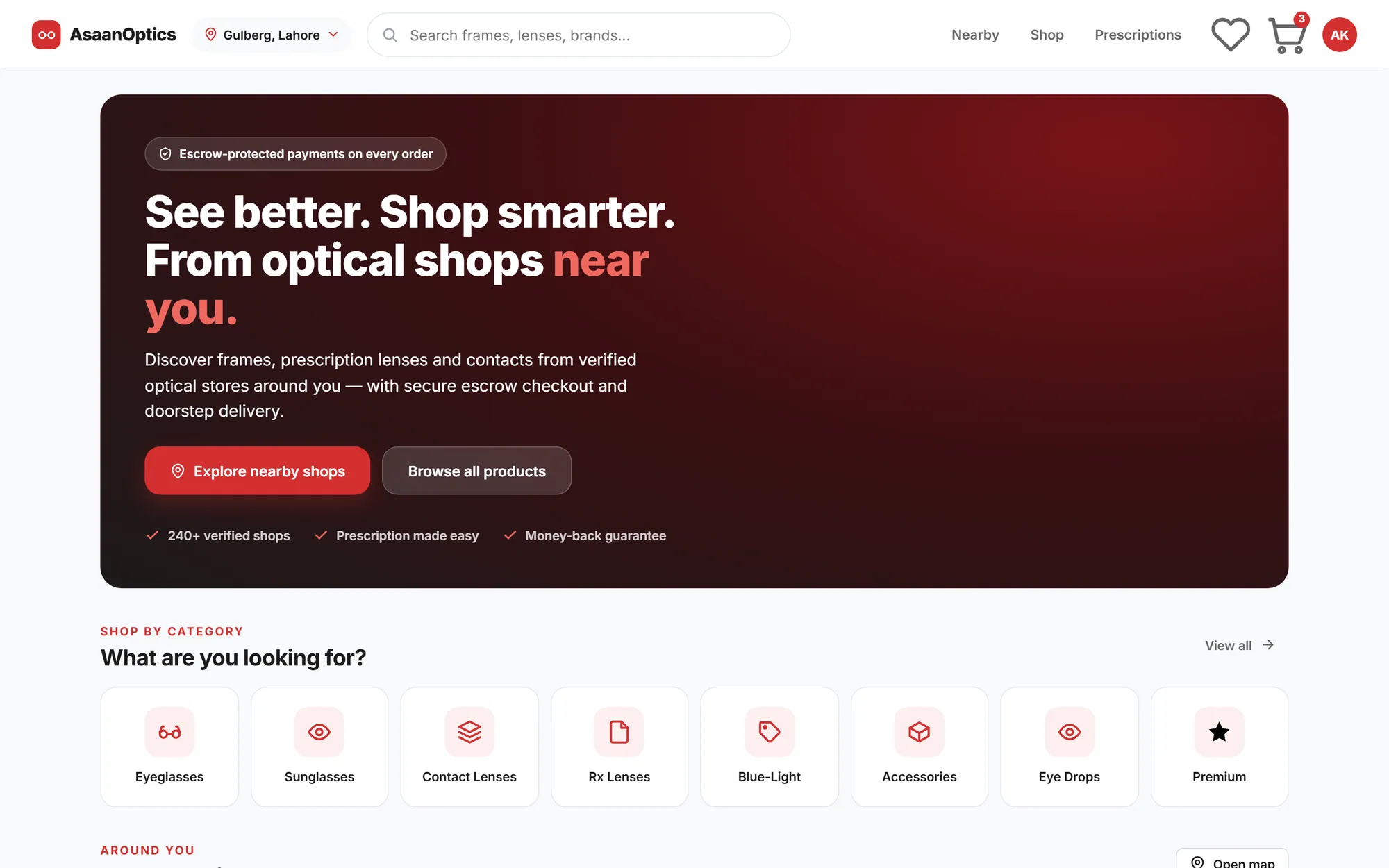
A multi-vendor marketplace for optical shops in Pakistan, with prescription ordering, nearby search and escrow-style checkout, currently in development.
- Web application
- E-commerce
- SaaS product
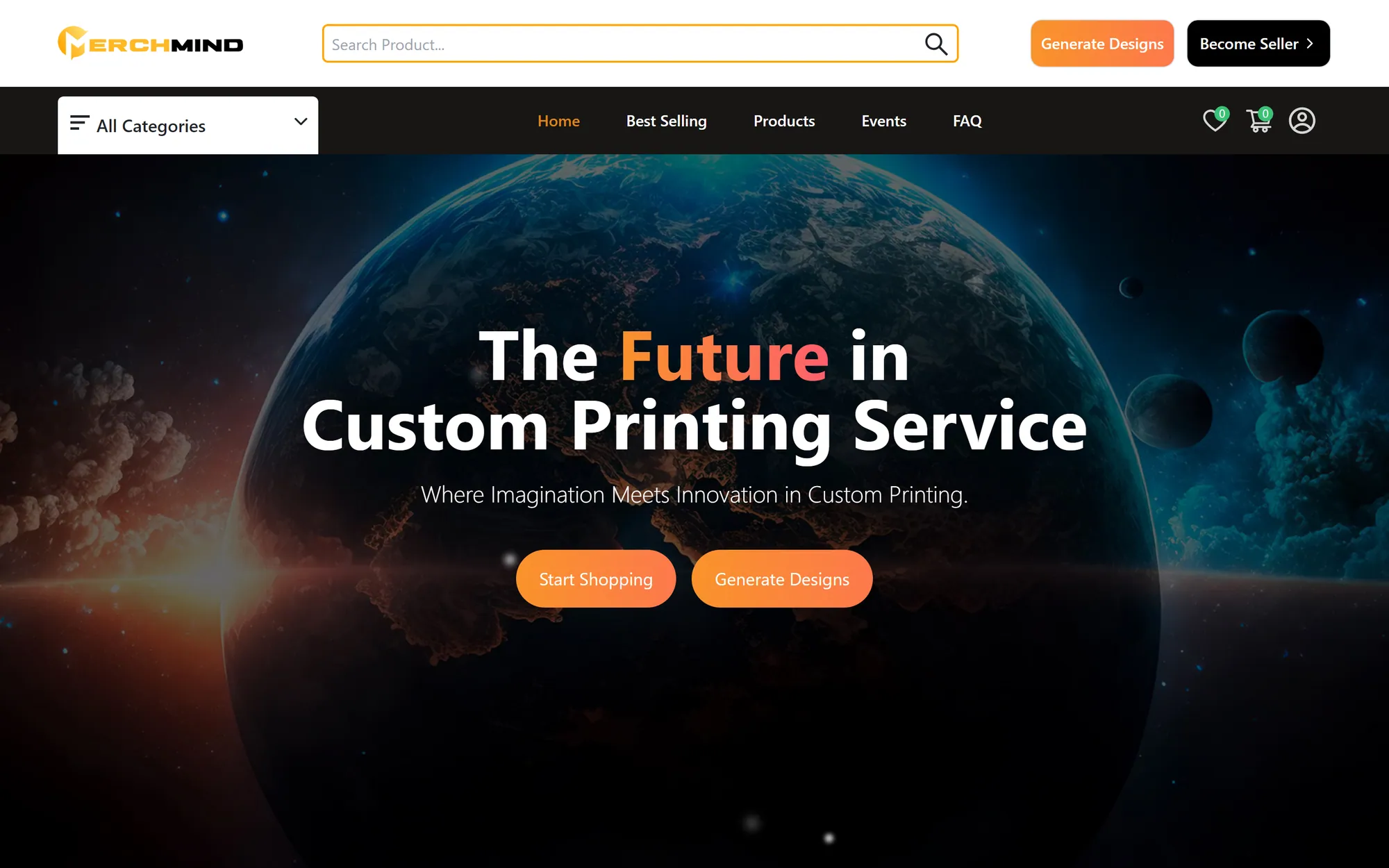
AI custom merch marketplace
MerchMind
A multi-vendor merch marketplace where shoppers describe a design in words, generate artwork with AI and preview it on products.
- Web application
- E-commerce
Have a software idea or a business process that needs a proper system?
Tell me what you are trying to fix. I will reply with honest questions, a practical plan and a realistic estimate.